
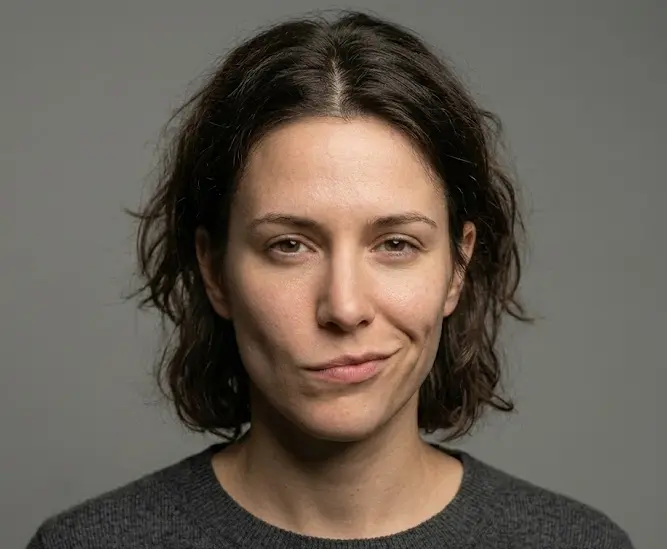
When Your Words and Your Face Disagree, People Believe Your Face
You have said “I’m open to ideas” with your arms crossed. You probably did not notice. Your team did.
That is the Mismatch Rule. When what you say and how you say it point in different directions, people believe the how. Tone, face and posture win. The words lose.
You may have heard a number: 93 percent of communication is nonverbal. It is a myth, and the myth costs you. Albert Mehrabian’s research looked at one narrow case: a person expressing a feeling or attitude, in a single word, where tone or face did not match. In that case, listeners trusted the tone and the face over the word. He never claimed that 93 percent of everything you say is body language. Your quarterly review is mostly words, and the words matter.
What survives is smaller and more useful. When the signals conflict, people trust the nonverbal ones.
Here is where it shows up for leaders:
- “Great work,” said while you check your phone.
- “My door is always open,” from a leader who sighs when someone walks in.
- “I’m fine with either option,” in a flat voice with a clenched jaw.
None of these are lies. They are mismatches. Your team does not hear confusion. They hear a signal to be careful around you.
The fix is not acting lessons. Acting is just a better-looking mismatch. The fix is to know what you actually feel before you speak, then say it out loud.
Before your next important conversation, ask one question: what am I actually feeling about this? If the answer is frustration, say so: “I’m frustrated, and I want to understand.” Your face and your words now agree, and people can work with that.
Want to see your own gap? The Mismatch Check is a short, private self-check. Nothing is collected. [Mismatch Check link]
People trust the signal that is true, so make all your signals true.
Just read. Try. Fail and get better.
#mismatchcheck #Leadership #Communication #CommunicateLikeAHumanBeing #Crazysmart





About Post Author
